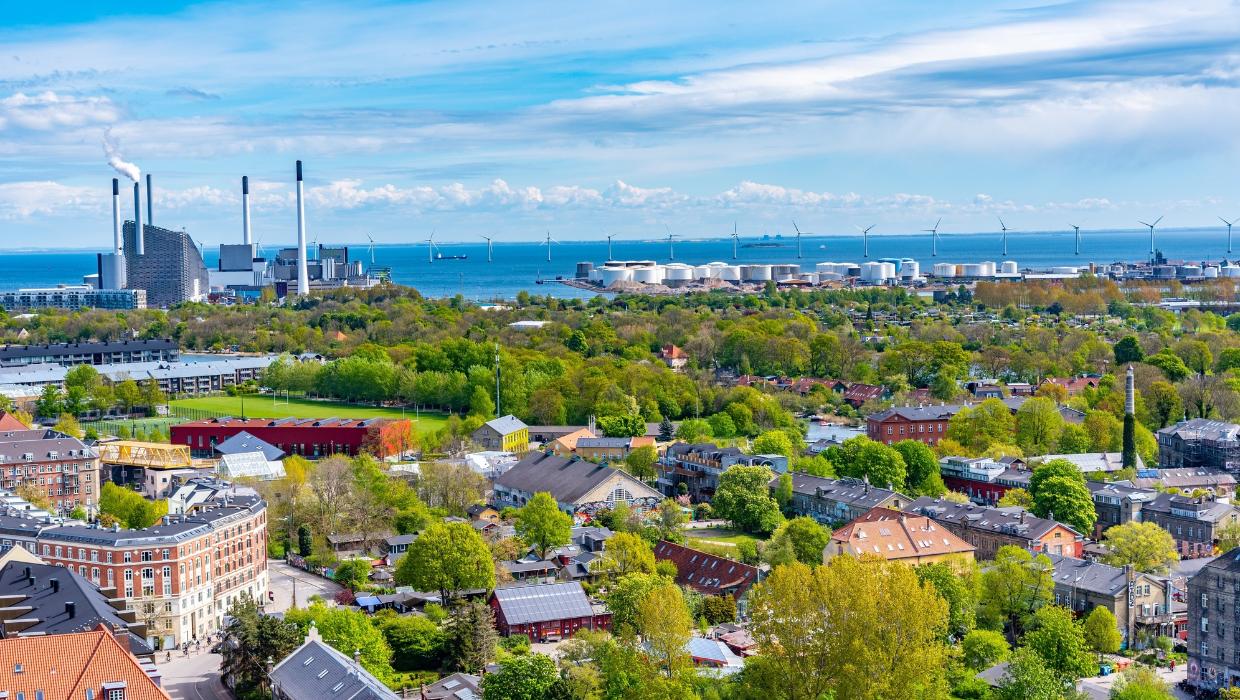
Density done well can bring the vision of many residents to life for Christchurch
Tom Logan
Chief Technology Officer

Tom argues that Christchurch’s housing intensification debate is ultimately a debate about what type of city we want to become. Continuing suburban sprawl will worsen infrastructure costs, congestion, flooding and social isolation, while medium-density, mixed-use neighbourhoods could create healthier, more vibrant and more sustainable communities. Rather than planning Christchurch like a small town, he argues the city should look to some of the world’s most liveable cities for inspiration on building a denser, greener and more connected urban future.
OPINION: The debate about housing intensification should have prompted the question: what type of city should Christchurch be in the future? Should we follow the American model with a hyper-dense centre and surrounding residential sprawl? Or should we follow a Europe model with more mixed-use and medium density throughout?
This is the conversation we should be having. Instead, the council has bowed to pressure from a select few homeowners and is currently seeking to maintain suburban sprawl across the city, along with pockets of poorly utilised medium density near key activity areas.
Christchurch is a city of forward-thinking residents. Twelve years ago, post-quake, Share an Idea showed how deeply we value vibrancy and sustainability. We called for people-oriented design, cafes and restaurants, transport choice, and greening.
Density done well can bring these to life in a way that the post-quake rebuild to date has failed to. When the councillors vote on March 1, they need to consider this vision for our city, not just the status quo demanded by a select, vocal few.
When we think about urban density, we should be envisaging vibrant neighbourhoods.
Neighbourhoods where people are utilising and monitoring the streets throughout the day and night, keeping us all safer.
Mixed-use neighbourhoods with small greengrocers, cafes, and hardware stores (etc) that support the residents and provide destinations for people to come and go.
Neighbourhoods with native trees and ecologically-designed catchment of water to reduce the risk of flooding and, as our climate continues to warm, heat waves.
This type of urban design is not utopic, it’s seen throughout the world.
In contrast, low-density development throughout the city is bad for several reasons. There is evidence to show that it negatively affects the mental health and development of children (who are exposed to monotonous environments and are completely dependent on their parents to access activities).
It negatively impacts the mental and physical health of adults and the elderly, requiring time investment to travel that could better be spent on social or physical activities. Traffic congestion detracts from the functioning of our public transport system and increases water and air pollution. Overall, it is bad for our physical and mental health, as well as that of our environment.
Low-density is also extremely expensive to both build and maintain. The rates rises we all dread come about because of inefficient use of our infrastructure. Regular flooding arises because we are unable to maintain or improve the infrastructure.
Instead, Christchurch needs to accept its role as New Zealand’s second-largest city. We are not a small town any longer. We need to manage population growth in a smart and efficient way, leveraging the benefits and avoiding the negatives.
Medium and high-density living is feared because of the potential for becoming a concrete jungle. No-one wants this and any reasonable urban design would avoid it: Just look around the world at the cities with the happiest residents.
But the restrictions proposed by the council on the densification plan change (PC14) will not achieve this. They are simply bowing to pressure without hearing from the wider community and Christchurch’s future residents.
Yes, density will reduce sunlight to the ground floor of some homes. But some people will prioritise being able to afford a house over sunlight on their ground floor.
Some people will prioritise being able to walk to their friends, to work, or to the park over sunlight on their ground floor.
We need to appreciate that some people have different priorities and, when thinking about our future city, we must ensure that we’re listening to a range of voices. We need to embrace diversity in our building stock to enable diversity in our neighbourhoods.
Consider that Christchurch is at an equivalent latitude to the south of France. There are 392 cities around the world which are denser and closer to the poles than we are. This includes many cities that consistently rank among the world’s most liveable places, such as Vienna, Copenhagen, Toronto, and Geneva.
These are the places we should look to for inspiration on how to design our city and be what we reflect on when deciding what type of city Christchurch should be in the future.
- This story originally appeared on Stuff.
Density done well can bring the vision of many residents to life for Christchurch
When we think about urban density, we should be envisaging vibrant neighbourhoods
